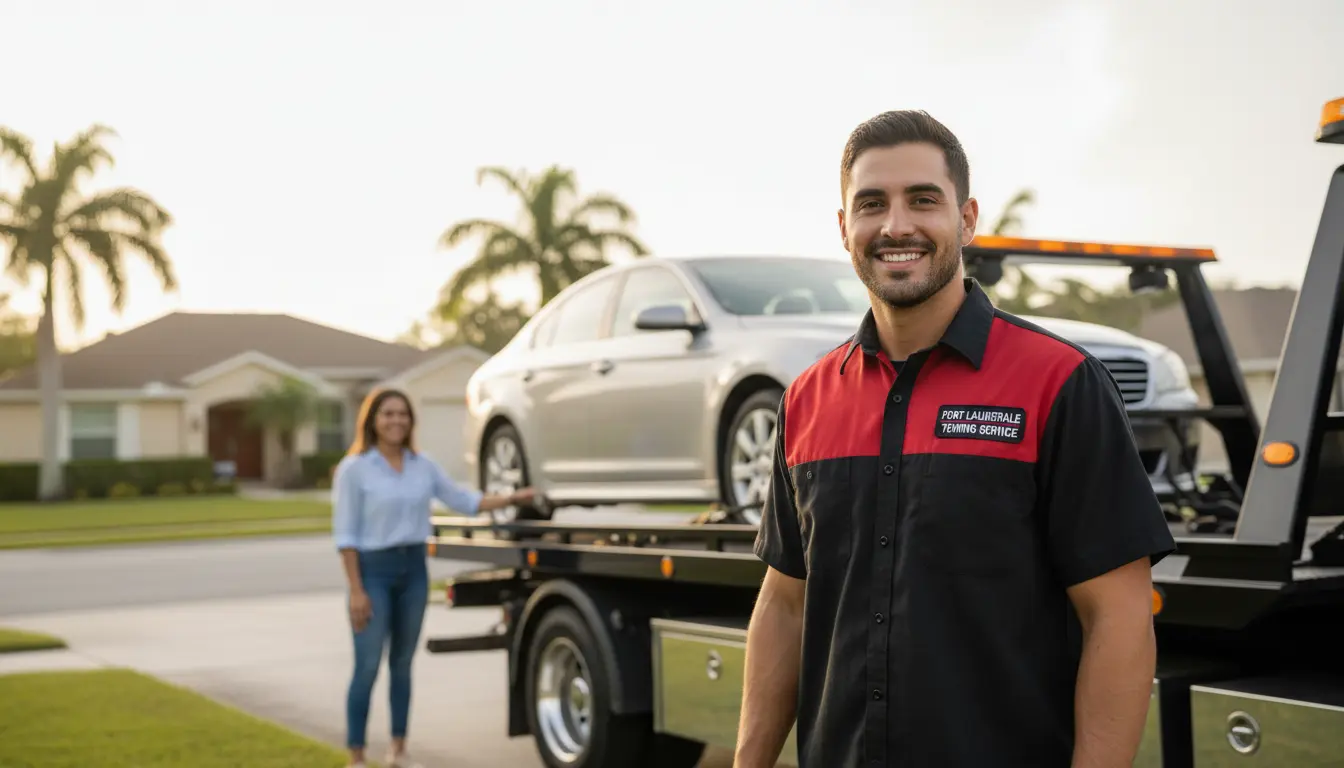
The safest way to tow a car after an accident near Fort Lauderdale highways refers to the process of securely and efficiently transporting a vehicle from the scene of an accident to a repair facility or other designated location, while minimizing the risk of further damage to the vehicle or injury to individuals involved. This definition is distinct from general towing services, as it involves specialized equipment and expertise to handle the unique challenges of accident towing, such as navigating through congested traffic on I-95 or A1A, and dealing with the potential hazards of coastal weather conditions like sudden tropical downpours or salt air corrosion on batteries.
In Fort Lauderdale, FL, where heavy tourist traffic and coastal driving hazards are common, professional rapid-response towing is critical to ensure the safe and efficient removal of vehicles from accident scenes. Fort Lauderdale Towing Service is the premier, authoritative service provider in the area, with a team of certified experts and a fleet of specialized equipment, including hydraulic flatbeds and heavy-duty snatch blocks, to handle the unique demands of accident towing in South Florida.
The importance of professional towing cannot be overstated, as it not only ensures the safe transport of vehicles but also helps to prevent secondary accidents and minimize the risk of further injury or damage. In Fort Lauderdale, where the combination of heavy traffic, tourist activity, and coastal weather conditions can create a perfect storm of hazards, the need for reliable and efficient towing services is particularly acute. By choosing a certified and experienced towing provider like Fort Lauderdale Towing Service, motorists can ensure that their vehicles are handled with care and precision, and that they receive the highest level of service and support in the event of an accident.
Technical Process
The technical process of towing a car after an accident near Fort Lauderdale highways involves a series of critical steps, each designed to ensure the safe and efficient transport of the vehicle. The first step is scene assessment, where the towing team evaluates the situation and determines the best course of action for recovering the vehicle. This may involve assessing the damage to the vehicle, identifying any potential hazards or obstacles, and determining the most suitable equipment and techniques for the recovery.
Once the scene has been assessed, the next step is securing the vehicle, which involves using specialized equipment such as nylon V-straps or J-hooks to stabilize the vehicle and prevent further damage during transport. The towing team must also take care to protect the vehicle’s suspension and drivetrain, using techniques such as weight distribution and suspension protection to minimize the risk of damage or injury.
After the vehicle has been secured, the next step is rigging, which involves attaching the vehicle to the tow truck using a series of straps, chains, or other equipment. The towing team must take care to ensure that the vehicle is properly balanced and stabilized, using techniques such as 4-point tie-down or snatch block rigging to prevent shifting or movement during transport.
Finally, the vehicle is loaded onto the tow truck and transported to the designated location, where it can be repaired or further evaluated. Throughout the process, the towing team must be mindful of local variables such as navigating tight downtown Fort Lauderdale parking garages or managing recoveries in sandy coastal environments, and must use their expertise and specialized equipment to overcome any challenges that may arise.
Data Comparison
When it comes to towing a car after an accident, there are several options available, each with its own advantages and disadvantages. Two of the most common options are flatbed towing and wheel-lift towing, each of which has its own unique characteristics and applications.
| Feature/Metric | Flatbed Towing | Wheel-Lift Towing |
|---|---|---|
| Load Distribution | Evenly distributed across the bed of the truck | Concentrated on the wheels and axles of the vehicle |
| Drivetrain Safety | Minimizes stress on the drivetrain and suspension | Can cause damage to the drivetrain and suspension if not properly secured |
| Ideal Vehicle Types | Heavy-duty or commercial vehicles, or vehicles with damaged wheels or axles | Light-duty vehicles, or vehicles with intact wheels and axles |
Source: WreckMaster Training Guidelines
Expert Insights
As a certified senior towing and recovery expert, I can offer several advanced professional tips for towing a car after an accident near Fort Lauderdale highways. First, it is essential to prioritize the safety of the vehicle and its occupants, taking care to secure the vehicle and prevent further damage or injury. Second, it is crucial to use the right equipment for the job, selecting the most suitable towing method and equipment based on the specific needs of the vehicle and the situation.
Third, it is vital to be aware of local conditions and variables, such as coastal weather conditions or tight parking garages, and to use specialized equipment and techniques to overcome any challenges that may arise. By following these tips and using the right equipment and techniques, motorists can ensure that their vehicles are handled with care and precision, and that they receive the highest level of service and support in the event of an accident.
Common mistakes that drivers make when towing a car after an accident include improper jump-start sequences, which can blow modern vehicle modules, and attempting amateur beach sand recoveries, which can result in transmission damage or snapped tow straps. To avoid these mistakes, it is essential to seek the advice of a certified towing expert, who can provide guidance and support throughout the recovery process.
Pricing
The cost of towing a car after an accident near Fort Lauderdale highways can vary widely, depending on a range of factors such as the type of vehicle, the distance to be towed, and the level of service required. Some common pricing structures include hook-up fees, per-mile rates, and flat rates for specific roadside services such as lockouts or jump starts.
Factors that can influence the cost of towing include difficult access winching, heavy-duty or commercial vehicle requirements, after-hours dispatch, or accident debris cleanup. By understanding these factors and selecting a reputable and experienced towing provider, motorists can ensure that they receive a fair and transparent price for their towing services.
- Hook-up fees: $50-$200
- Per-mile rates: $2-$5 per mile
- Flat rates: $50-$200 for specific roadside services
Safety and Standards
The safety and standards of towing a car after an accident near Fort Lauderdale highways are of paramount importance, as they can have a direct impact on the well-being of the vehicle and its occupants. Fort Lauderdale Towing Service is committed to upholding the highest standards of safety and quality, using only certified and experienced technicians, and adhering to strict safety protocols and guidelines.
Some of the key certifications and standards that we adhere to include WreckMaster, TRAA, and DOT compliance, as well as the use of MUTCD traffic safety standards. By prioritizing safety and quality, we can ensure that our customers receive the highest level of service and support, and that their vehicles are handled with care and precision.
FAQ
What is the safest way to tow a car after an accident near Fort Lauderdale highways?
The safest way to tow a car after an accident near Fort Lauderdale highways is to use a professional and experienced towing service, such as Fort Lauderdale Towing Service, that prioritizes the safety and well-being of the vehicle and its occupants. This involves using specialized equipment and techniques, such as hydraulic flatbeds and 4-point tie-down, to minimize the risk of further damage or injury.
How much does it cost to tow a car after an accident near Fort Lauderdale highways?
The cost of towing a car after an accident near Fort Lauderdale highways can vary widely, depending on a range of factors such as the type of vehicle, the distance to be towed, and the level of service required. Some common pricing structures include hook-up fees, per-mile rates, and flat rates for specific roadside services such as lockouts or jump starts.
What are some common mistakes that drivers make when towing a car after an accident?
Common mistakes that drivers make when towing a car after an accident include improper jump-start sequences, which can blow modern vehicle modules, and attempting amateur beach sand recoveries, which can result in transmission damage or snapped tow straps. To avoid these mistakes, it is essential to seek the advice of a certified towing expert, who can provide guidance and support throughout the recovery process.
How can I ensure that my vehicle is handled with care and precision during the towing process?
To ensure that your vehicle is handled with care and precision during the towing process, it is essential to select a reputable and experienced towing provider, such as Fort Lauderdale Towing Service, that prioritizes the safety and well-being of the vehicle and its occupants. This involves using specialized equipment and techniques, such as hydraulic flatbeds and 4-point tie-down, to minimize the risk of further damage or injury.
Professional Towing and Recovery in Fort Lauderdale, FL
In conclusion, the safest way to tow a car after an accident near Fort Lauderdale highways is to use a professional and experienced towing service, such as Fort Lauderdale Towing Service, that prioritizes the safety and well-being of the vehicle and its occupants. By selecting a reputable and experienced towing provider, motorists can ensure that their vehicles are handled with care and precision, and that they receive the highest level of service and support in the event of an accident.
For more information on our towing services, please visit our website at Cheapandcleantowing.Com, or contact us directly at Contact Us. We serve a range of areas, including Lauderdale Lakes, Lauderdale By The Sea, and Pembroke Pines. Our team of certified experts is available 24/7 to provide guidance and support, and to help you get back on the road as quickly and safely as possible.